 TM
TM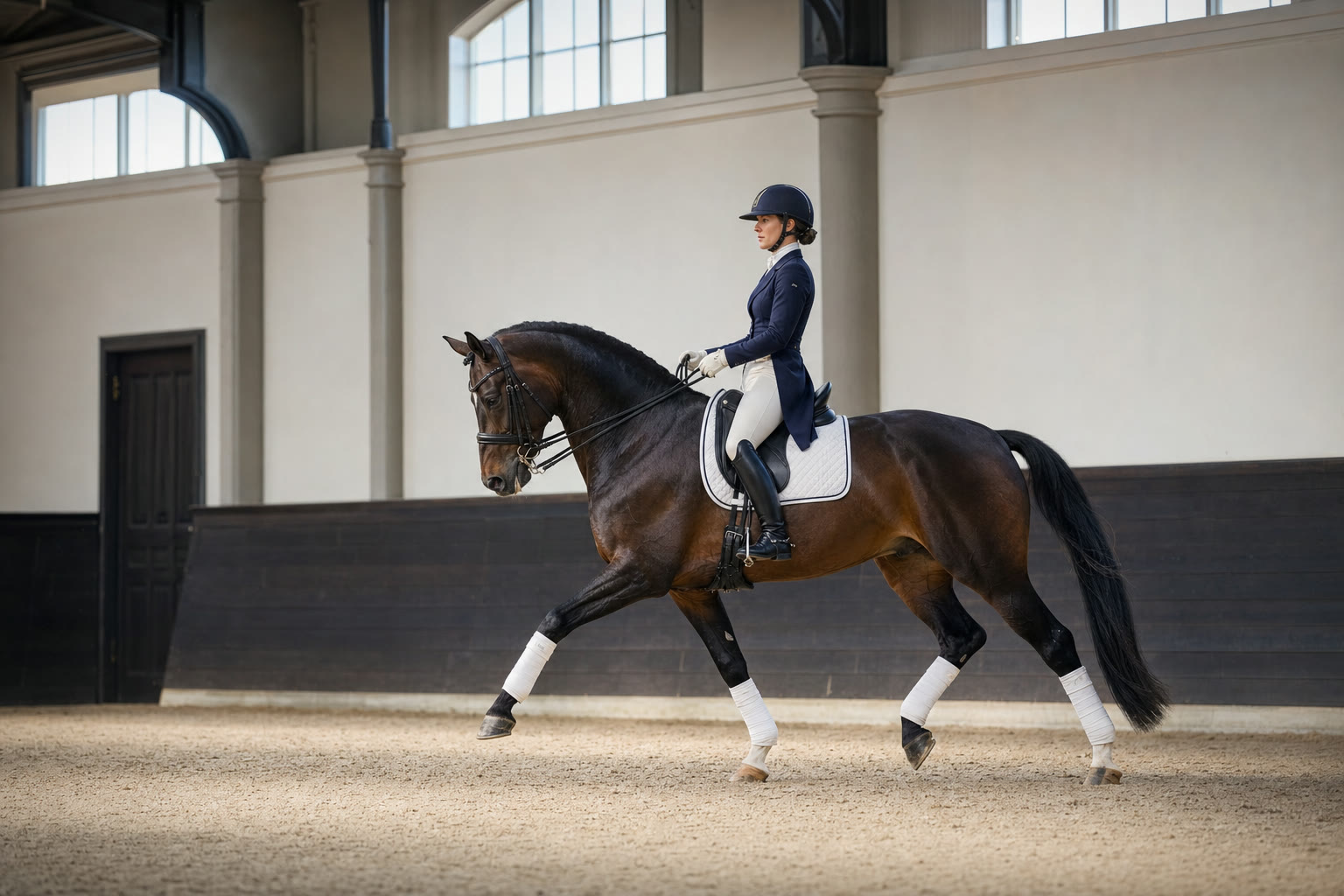
The goal is not cinematic footage. The goal is a stable, well-lit, repeatable view in which the complete horse remains visible.
If you are concerned about pain, injury, illness, or lameness, stop and contact a licensed veterinarian. Do not ask a horse to continue moving only to complete a video. Follow the veterinarian's requested views and handling instructions.
Put safety ahead of the shot
Set the scene once
Use landscape
Turn the phone sideways. A wide frame gives the horse room to enter, travel, and leave without clipping the head, feet, or handler.
Keep the camera still
Use a tripod or brace the phone. Avoid walking beside the horse, digital zoom, fast pans, and frequent reframing.
Choose even light
Keep strong sun or bright arena doors behind the camera when possible. Avoid silhouettes, deep shadow, and mixed flashing light.
Show the surface
Include enough ground to see foot placement and enough background to understand the horse's line of travel.
Place the camera far enough away to keep the whole horse visible. Do not zoom in on one limb unless a veterinarian specifically requests it.
Capture a repeatable set of views
The veterinarian's instructions take priority. When no custom protocol has been given, complete straight lines from both directions can provide clearer context than a collection of short, changing angles.
Left to right
Keep the camera perpendicular to the travel line and leave several strides before and after the center of frame.
Right to left
Use the same path, distance, gait, camera height, and framing in the opposite direction.
Toward the camera
Stand safely out of the travel line. Keep the horse centered and allow the complete body and feet to remain visible.
Away from the camera
Continue on the same straight route without following or zooming. Let the horse travel through the frame.
Only when requested
Circles, different surfaces, flexion, ridden work, or close views should follow professional direction and safe handling.
Match old and new
For comparison over time, repeat the same location, distance, light, gait, route, and camera settings where practical.
Check the file before leaving
Do not add slow motion, stabilization, filters, cropping, or speed changes to the only copy. If you create an edited version, keep and share the original when requested.
One repeatable workflow
Let the app guide the capture.
BarnPilot Soundness Scan guides six landscape trot views and organizes visible observations, recording limitations, and follow-up questions. It is informational and does not diagnose, clear a horse for work, or replace a veterinary examination.
Explore BarnPilot